Talking Nature Risk with Dimple Patel and Siddarth Shrikanth
Why Nature Risk Belongs in the Boardroom, Not Just the Sustainability Report
A conversation between Dimple Patel (CEO, NatureMetrics) and Siddarth Shrikanth (Investment Director, Just Climate) on translating nature into language CFOs already speak.
Over half of global GDP is moderately or severely dependent on nature. Almost none of it is being measured as a financial risk. In this conversation, NatureMetrics CEO Dimple Patel sits down with Siddarth Shrikanth, Investment Director at Just Climate to unpack why that's changing, what "nature risk" actually means for a balance sheet, and why the organisations that get ahead of it now will be the ones still investable in ten years.
Key takeaways
- Nature risk isn't abstract, it's financial. It shows up as physical risk to farmland, forestry and infrastructure, and as regulatory and reputational exposure that's tightening across the board.
- It's systemic, not cyclical. Unlike geopolitical risk, nature risk doesn't stabilise on its own. Left unmanaged, it compounds quietly in the background.
- Standardisation is the unlock. Every geography and business is different, but comparable, segmented data is what lets a portfolio manager act on it.
- You don't need to boil the ocean. A quarterly screening can flag the 10% of sites that need attention, so resource goes where the risk actually sits.
- The cost of starting has collapsed. AI-driven data processing means what used to take years of manual monitoring is now a fast, affordable first step.
The gap NatureMetrics is built to close
"That first step of understanding is usually missing," says Siddarth, framing the problem from an investor's seat. Nature, he argues, is easy to care about in the abstract and almost impossible to act on at scale, because nobody's translated it into terms a portfolio can use.
That's the gap that NatureMetrics' new data layer Global Nature Risk is built to fill. After years spent measuring nature performance on the ground, the pattern she kept seeing wasn't just clients wanting more monitoring; it was clients trying to understand risk first, and finding that most tools stopped at species counts and habitat maps. "It really goes beyond species information, habitat information," she says. We need to think about entire ecosystems.
The reframe both land on: nature isn't a side issue, it's ecosystem services. And services connect directly to the product lines and balance sheets that businesses already track.
Why institutional investors can't sit this one out
Siddarth's view from the investor side reinforces the same urgency. Even institutional investors with no explicit climate or nature mandate are seeing physical risk materialise directly in asset values, farmland, forestry, real estate, infrastructure, through flooding, fire and drought. Regulators aren't necessarily writing new rules, he notes, but they are enforcing existing ones more consistently, and the reputational and financial consequences of falling short are rising.
Groups like Nature Action 100 are pushing a more proactive stance: understand where the risk sits in a portfolio before it hits, rather than reacting after the fact. For Siddarth, it comes down to fiduciary duty. "It's really hard to argue that nature is not one of [the material risks]," he says. "The challenge, of course, is making it tangible to someone who's come up through traditional finance."
Making nature risk comparable, not just complex
Every geography is different. Every business operation draws on a different mix of ecosystem services. So how do you make any of it comparable across a portfolio?
That's where segmentation comes in. Rather than trying to model the full complexity of every site, Dimple explains that NatureMetrics breaks nature risk into a standardised layer that can be assessed consistently across business units and geographies, giving teams an immediate read on where the risk sits, while leaving room for deeper, local investigation where it matters. "At the moment, the scary part is it's hidden until it's not hidden," she says. "And then when it's not hidden, it's really [expensive]."
Why now
The question every founder and investor in this space gets asked: with geopolitics, macro volatility and everything else competing for attention, why focus on nature risk now?
Siddarth's answer: why not now. Nature risk is a slow-rolling crisis, and the point at which it becomes materially disruptive to a specific business is unpredictable. Waiting doesn't reduce the risk, it just compounds it on top of everything else already in motion.
Dimple frames the contrast with geopolitical risk clearly: geopolitical shocks are acute but tend to stabilise. Nature risk doesn't. "There's no single button, there's no single agreement that is going to suddenly make it go away," she says. "We are in this very sensitive window of time where we do have the opportunity to turn it around."
What "good" looks like
Siddarth sets a practical bar: within five years, every major organisation should have a clear handle on where nature risk sits across its portfolio and supply chain, and a plan for it, even if that plan is simply "we know it's there and we can't act yet."
Dimple describes how that plays out in practice through NatureMetrics' quarterly assessments: identifying high- and low-risk locations, grouped by business activity, so a company with thousands of sites can focus effort on the handful that actually need it. Track that over time, she notes, and you can see risk shift, up or down, before it becomes a surprise. "There should not be surprises," she says. "That's any part of running a business."
And that first step, both agree, has never been more accessible. AI-driven data processing has brought the cost of screening down dramatically compared to manual assessment, removing the "we don't know where to start" barrier that's kept many organisations on the sidelines.
The bottom line
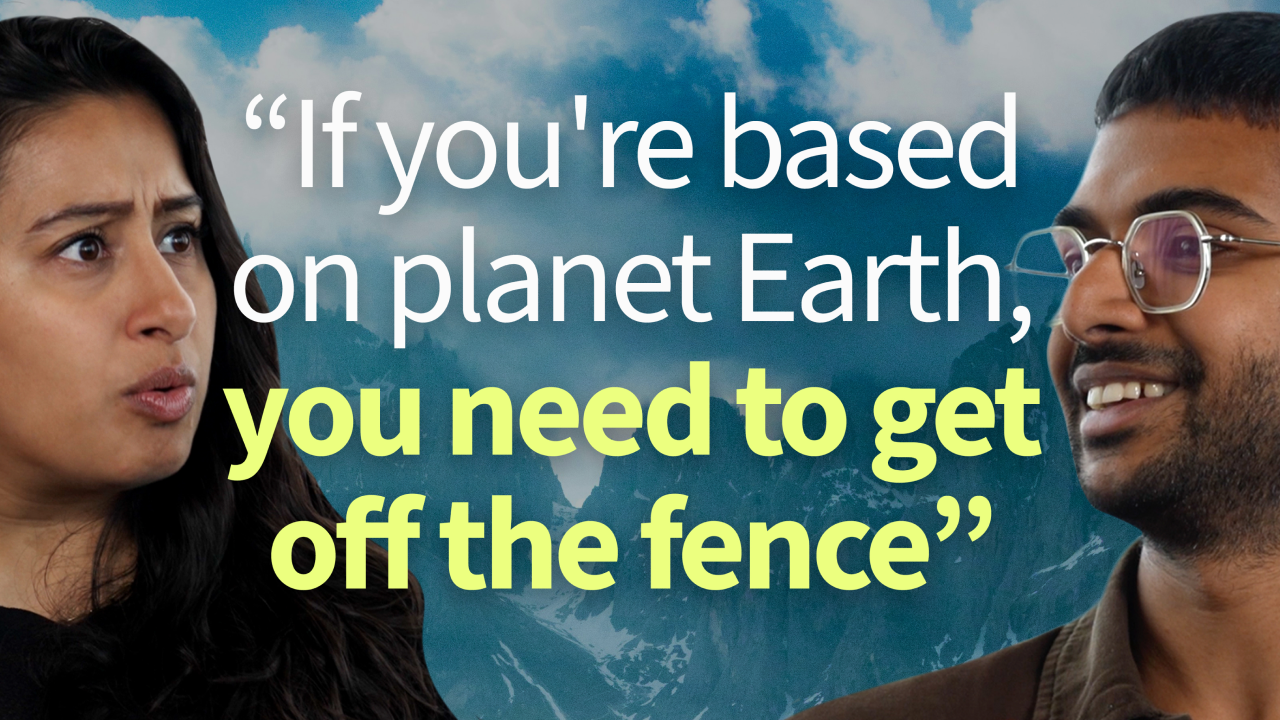
Siddarth's closing message is direct: "If you're based on planet Earth, you rely on planet Earth." Understanding where a business depends on nature, and where the risk lies, isn't a sustainability nice-to-have. It's core to business continuity and long-term performance.
See how Global Nature Risk gives your portfolio a clear read on where risk sits here