Resource
Biological Evidence for AMP8 WINEP Delivery: Prove Your Nature Based Solutions Investment Is Working.
How eDNA technology helps water companies demonstrate genuine ecological recovery at catchment scale — and meet AMP8's most demanding biodiversity obligations yet.
Inside this guide
AMP8 sets the most ambitious biodiversity requirements ever placed on the UK water sector. The Water Industry National Environment Programme (WINEP) now requires water companies to demonstrate that river ecosystems are biologically recovering - not just passing basic chemistry standards. This guide explains what biological evidence WINEP requires, how eDNA technology helps you meet those obligations at catchment scale, and what a practical monitoring programme looks like in practice.
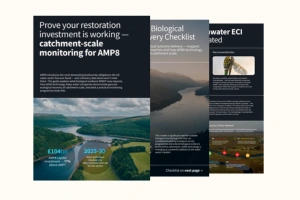
What’s inside
- Know what WINEP actually requires — seven AMP8 biological obligations mapped against current monitoring approaches and where the evidence gaps are
- Understand why chemistry data isn't enough — a river can pass basic chemistry tests and still be biologically impaired; see what Ofwat and the EA now expect as proof of ecological recovery
- Get a practical catchment monitoring blueprint — step-by-step from sampling design to condition reporting, with an illustrative catchment map showing biological scores across a live river network
- See how to prove your NbS is working — not just that physical works were completed, but that biological communities are genuinely recovering in ways that satisfy WINEP outcome reporting
- Scale monitoring without scaling specialist resource — how operational teams and citizen scientists can extend biological coverage across catchments traditional surveys can't reach cost-effectively
- One evidence programme, multiple frameworks — how the same biological data satisfies WINEP reporting, TNFD freshwater disclosure, and board-level nature performance tracking simultaneously