Client Stories
HECTAR
Proving what works: How HECTAR is building the monitoring standard for regenerative agriculture
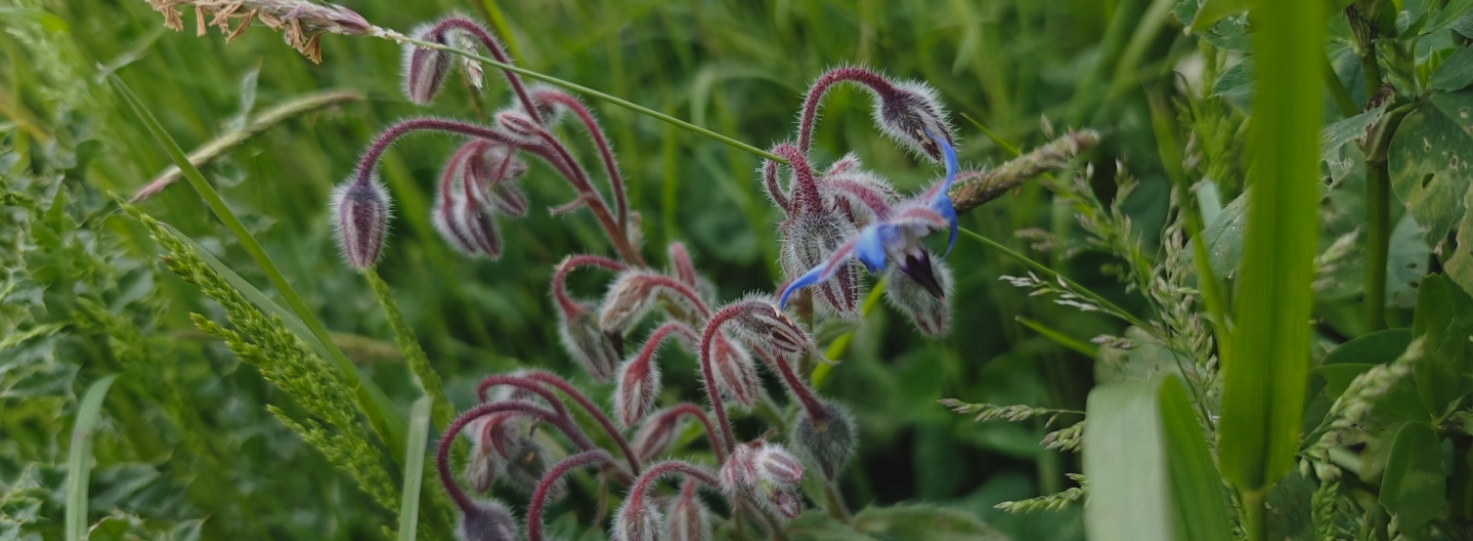
160-hectare
Full biodiversity baseline delivered in 8 weeks, ready to brief investors on trends and patterns
152 species
confirmed in one deployment, including 24 IUCN Red List species and 2 invasive species
Non-expert methods
including a simple flower swab for pollinators, run entirely by HECTAR's own team
Company
HECTAR
Hectar is a French ecosystem dedicated to accelerating the regenerative agriculture transition, combining a 300+ hectare pilot farm, startup acceleration, and entrepreneurial mentoring to support farmers, companies and institutions.
Sector and Environment
Consumer & Agriculture
Freshwater Rivers
Farmland
Sample type
Aquatic
Invertebrate
Surface swab

Team Member, HECTAR
“everything has been thought of to make the process as easy as possible--from the video guides and the kit deployment process down to the pre-arranged return shipping documents. From a farmer’s point of view, this makes biodiversity measurement less complicated and time consuming”
Overview
Hectar is a 300-hectare regenerative agriculture and organic farm near Paris that strives to drive the social and economic shift toward regenerative agriculture by uniting the entire value chain—from farmers and entrepreneurs to startups, cooperatives, food manufacturers, and retailers. Bringing together hands-on field experience and practical innovation, Hectar delivers scalable solutions grounded in three core pillars: modeling, field testing, and knowledge sharing. Today, Hectar is: 300 hectares of polyculture-livestock pilot farm, targeted training and mentorship programs addressing key agricultural innovation challenges, and an impact-oriented seminar location with over 35,000 visitors hosted to date.
The challenge
HECTAR is seeking and testing biodiversity monitoring solutions that could potentially outperform and scale faster than conventional monitoring approaches. Traditional surveys require multiple taxonomic specialists and precious time from farmers, and are limited in their ability to scale, especially as corporate partners face growing pressure to report against CSRD, SAI and TNFD.
As HECTAR put it, they wanted "an accessible, reliable, and scalable approach to measuring evolutions in biodiversity at the farm level, with a view to lending credibility to, and directing, funding for biodiversity restoration on agricultural land."
Our role
NatureMetrics deployed one integrated eDNA campaign across the full 300 hectares, aquatic eDNA from the ponds, airborne/surface eDNA for mammals and birds, invertebrate pan traps, and a pollinator surface-swab trial, built to be repeatable at scale.
HECTAR's own team collected the samples; swabbing flowers for pollinator DNA needed no taxonomic training and no invasive handling. Results landed on the NatureMetrics Intelligence Platform alongside remote-sensing Habitat Insights within 8 weeks, ready for trend analysis, moving the data from the lab bench to the farm manager's dashboard.
The findings
The survey documented 152 species, including 24 IUCN Red List species and 2 invasive species. Standout finds included the Vulnerable Reeves's Pheasant, confirming the site as a refuge for sensitive wildlife, and an early flag on the invasive Spotted Wing Drosophila before it became a yield problem.

The impact
A full-farm biodiversity baseline, collected by non-specialists and investor-ready in 8 weeks, is a methodology other sites can actually adopt. That's the case HECTAR is now making to the corporates supporting the project, . The premise being explored is simple: can eDNA technology provide a monitoring approach that farmers can run themselves, at scale, with evidence rigorous enough to direct real capital? One farm's baseline is becoming the template for how regenerative agriculture gets measured, proven, and funded.
In collaboration with: HECTAR, alongside fellow assessment partners Synature, Beeodiversity and GENESIS,
More client stories
Learn how NatureMetrics’ data and insight empowered businesses
with the clarity they needed to make lasting change
HECTAR
Proving what works: How HECTAR is building the monitoring standard for regenerative agriculture
Read more →

Wildfarmed
126% increase in pollinator activity: how Wildfarmed proved regenerative farming works
Read more →
AtkinsRéalis Mongolia
How AtkinsRéalis used eDNA to enhance biodiversity assessment for irrigation investment in Mongolia
Read more →Ready to build a nature strategy on evidence you can defend?
Tell us where you are and what your board, auditors or investors are asking for. We will map the fastest route to decision-grade answers.