Client Stories
Lebanon Reforestation Initiative
How the Lebanon Reforestation Initiative used eDNA to uncover 63 vertebrate taxa in Lebanon’s understudied freshwater systems
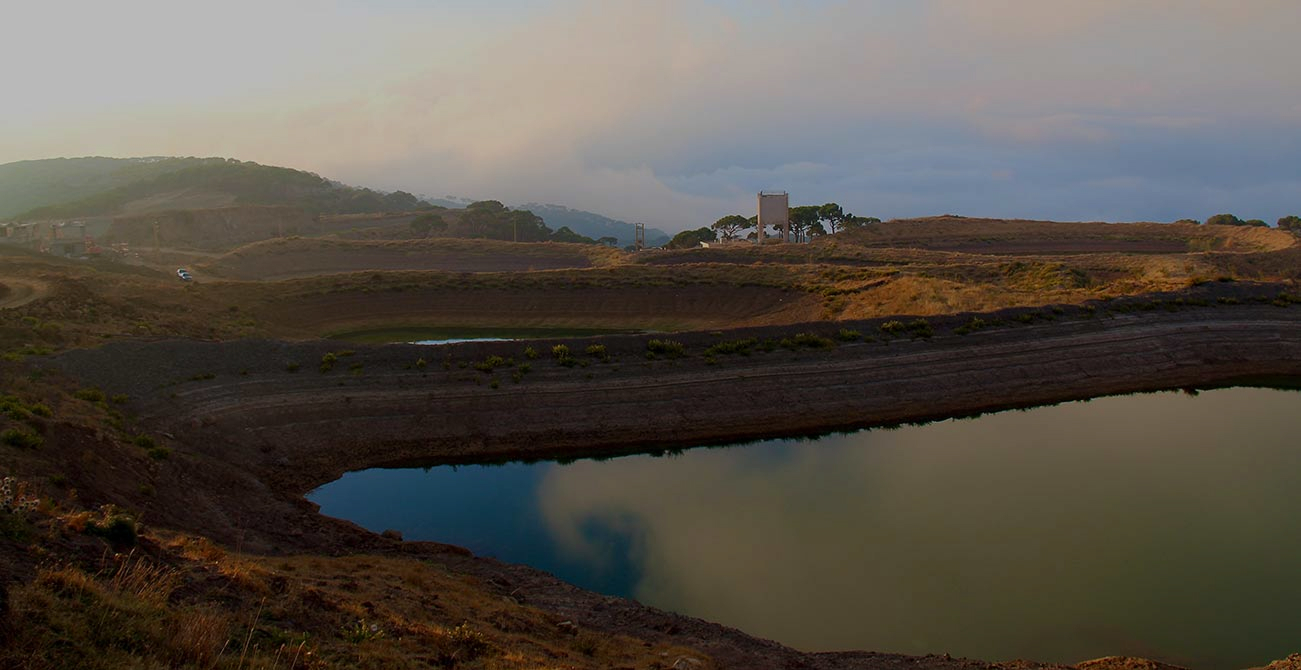
63 taxa
Vertebrates detected from just 20 water samples across four waterbodies.
Near Threatened
The eastern fire salamander, a target for the pet trade, confirmed within a protected site.
5 vertebrate groups
Fish, amphibians, birds, reptiles and mammals captured in a single survey.
Company
Lebanon Reforestation Initiative
The Lebanon Reforestation Initiative (LRI) restores Lebanon’s forests and ecosystems, working with local communities to build climate resilience and more sustainable land management.
Sector and Environment
Conservation & Forestry
Freshwater Rivers
Sample type
Aquatic

Overview
The Lebanon Reforestation Initiative (LRI) partnered with NatureMetrics to survey freshwater biodiversity in Lebanon, a region where wildlife has been little studied. Set up in 2011, implemented by the US Forest Service and funded by USAID, LRI focuses on restoring Lebanon’s fragile ecosystems through new scientific approaches and technologies.
A pilot aquatic eDNA survey of 20 samples detected 63 vertebrate taxa, including a Near Threatened salamander. Following its success, LRI now plans to scale eDNA monitoring across Lebanon.
The challenge
Lebanon’s freshwater ecosystems have been understudied for decades, leaving large gaps in national species distribution data and no systematic monitoring of fauna. Many riparian habitats have also been degraded by pollution and mismanagement.
To assess the success of its restoration work, LRI’s team, led by Samara P. El-Haddad and Karma Bouazza, launched an R&D programme to bring wildlife monitoring into the picture. They needed to:
- Collect baseline biodiversity data to guide the rehabilitation of degraded riparian habitats
- Set up long-term monitoring to track how biodiversity recovers at key sites under proper management
Our role
After attending one of our webinars, the LRI team got in touch to plan a pilot project.
LRI chose an aquatic eDNA survey to set an initial biodiversity baseline, collecting 20 samples from four waterbodies. Our vertebrate analysis was used to capture a broad dataset across fish, amphibians, mammals, reptiles and birds.
Our international logistics team worked closely with LRI to secure all the necessary permits. We now have a long-term arrangement with the Lebanese government to continue supplying LRI with DNA-based services.
The findings
With just 20 samples, the pilot detected 63 taxa across the sites – a result full of surprises for the LRI team. These included 15 fish, 4 amphibians, 24 birds, 2 reptiles and 18 mammals.
Notable detections:
- Eastern fire salamander: confirmed within a protected site. Prized by pet traders for its bright colours and patterns, it is listed as Near Threatened on the IUCN Red List of Threatened Species.
- Bats: their detection showed that the habitat supports local bat populations, and that eDNA is a cost-effective way to survey them.
The impact
The pilot gave LRI species data it had no previous way of collecting, and showed eDNA to be a cost-effective monitoring tool for a data-scarce region. LRI and NatureMetrics are now carrying out further surveys at these sites and across Lebanon, to support ongoing restoration and biodiversity reporting.
More client stories
Learn how NatureMetrics’ data and insight empowered businesses
with the clarity they needed to make lasting change
HECTAR
Proving what works: How HECTAR is building the monitoring standard for regenerative agriculture
Read more →

Wildfarmed
126% increase in pollinator activity: how Wildfarmed proved regenerative farming works
Read more →
AtkinsRéalis Mongolia
How AtkinsRéalis used eDNA to enhance biodiversity assessment for irrigation investment in Mongolia
Read more →Ready to build a nature strategy on evidence you can defend?
Tell us where you are and what your board, auditors or investors are asking for. We will map the fastest route to decision-grade answers.