Client Stories
NIRAS
How NIRAS compared eDNA with net fishing in Sweden’s Karlskrona archipelago, and showed eDNA can deliver comprehensive fish data with less impact on the ecosystem.
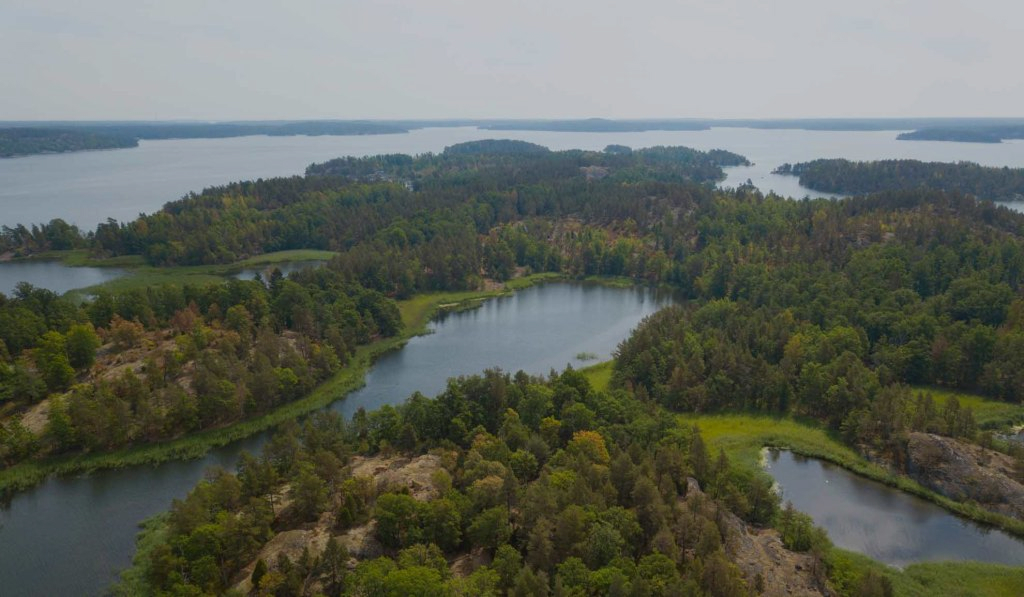
16 stations, 2 methods
eDNA and net fishing were run side by side at 16 stations for a direct comparison.
Just 3 litres of water
was collected at each eDNA station, with far less environmental impact than net fishing.
40+ eDNA projects
have been delivered through the NatureMetrics and NIRAS partnership across Swedish freshwaters, the Baltic Sea and the Arctic.
Company
NIRAS
NIRAS is a Danish-rooted engineering consultancy with more than 3,000 specialists across Northern Europe, Africa and Southeast Asia. It is foundation- and employee-owned, and its work spans environment and ecology, water, energy and infrastructure.
Sector and Environment
Conservation & Forestry
Freshwater Rivers
Marine
Sample type
Aquatic

Overview
NatureMetrics and NIRAS have a long-standing commercial partnership. Together we have delivered more than 40 eDNA projects across Swedish freshwaters, the Baltic Sea and the Arctic, for clients in hydropower, offshore wind and local government.
This client story looks at one of those projects. The Blekinge County Administrative Board commissioned NIRAS to map the fish community in Gåsefjärden, part of the Karlskrona archipelago. By running eDNA alongside conventional net fishing, the project showed that eDNA can deliver comprehensive fish community data with minimal disturbance to the ecosystem and less risk to field teams.
The challenge
Comprehensive fish data, minimal disturbance
The Blekinge County Administrative Board needed a survey method that could deliver comprehensive data on fish species while minimising environmental disturbance.
NIRAS and its client wanted to compare eDNA and conventional net fishing directly. Their aims were to understand the relative merits of each approach and to gather as much data as possible.
Our role
NatureMetrics supported NIRAS in designing and deploying a sampling programme that combined both methods:
- 45 stations were surveyed using net fishing.
- 17 stations were surveyed using eDNA.
- 16 stations were assessed using both methods at the same time, allowing a direct comparison.
A single 3-litre water sample was collected at each eDNA station. This generated comparable biodiversity data with significantly less environmental impact than net fishing.
The findings
The parallel comparison showed that eDNA could deliver comprehensive fish community data while causing minimal disturbance to the ecosystem and reducing risk to field teams.
The results validated eDNA as a practical, lower-impact alternative to conventional methods for fish biodiversity surveys in coastal and freshwater environments.
The impact
Larger datasets, lower impact
- Bigger, more cost-effective datasets: eDNA allows NIRAS to offer its clients larger and more cost-effective fish datasets.
- Ethical, non-invasive surveying: eDNA addresses the ethical and conservation concerns that come with traditional net fishing.
- Safer fieldwork: Collecting water samples reduces the risks field teams face compared with net fishing.
- A growing partnership: The project adds to more than 40 eDNA projects delivered through the NatureMetrics and NIRAS partnership across Swedish freshwater, Baltic Sea and Arctic environments.
More client stories
Learn how NatureMetrics’ data and insight empowered businesses
with the clarity they needed to make lasting change
HECTAR
Proving what works: How HECTAR is building the monitoring standard for regenerative agriculture
Read more →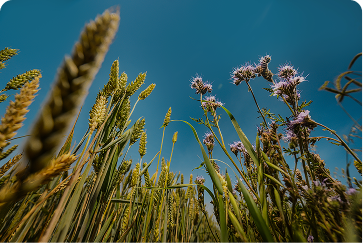
Wildfarmed
126% increase in pollinator activity: how Wildfarmed proved regenerative farming works
Read more →
AtkinsRéalis Mongolia
How AtkinsRéalis used eDNA to enhance biodiversity assessment for irrigation investment in Mongolia
Read more →Ready to build a nature strategy on evidence you can defend?
Tell us where you are and what your board, auditors or investors are asking for. We will map the fastest route to decision-grade answers.