Client Stories
Okala
How Okala used eDNA to unlock green investment in 270,000 hectares of Gabonese rainforest
60% more mammal species
Detected by eDNA than by traditional methods, including flying squirrels that are virtually impossible to survey conventionally in Central Africa
1,300+ species
Identified across vertebrates and invertebrates from just 40 water samples
11 IUCN Red Listed species
Including forest elephants and giant pangolins, plus 25 species potentially new to science

Company
Okala
Okala is a nature-tech company that combines AI with ecological expertise to turn complex biodiversity and carbon data into clear, decision-ready insights. Working with governments, NGOs and industry in more than 15 countries, it brings together different methods to measure nature at scale.
Sector and Environment
Conservation & Forestry
Forest
Sample type
Aquatic

Dr Robin Whytock
CEO, Okala
“Traditional approaches to ecological monitoring are not very scalable. Of all these approaches, eDNA is the most scalable.”
Overview
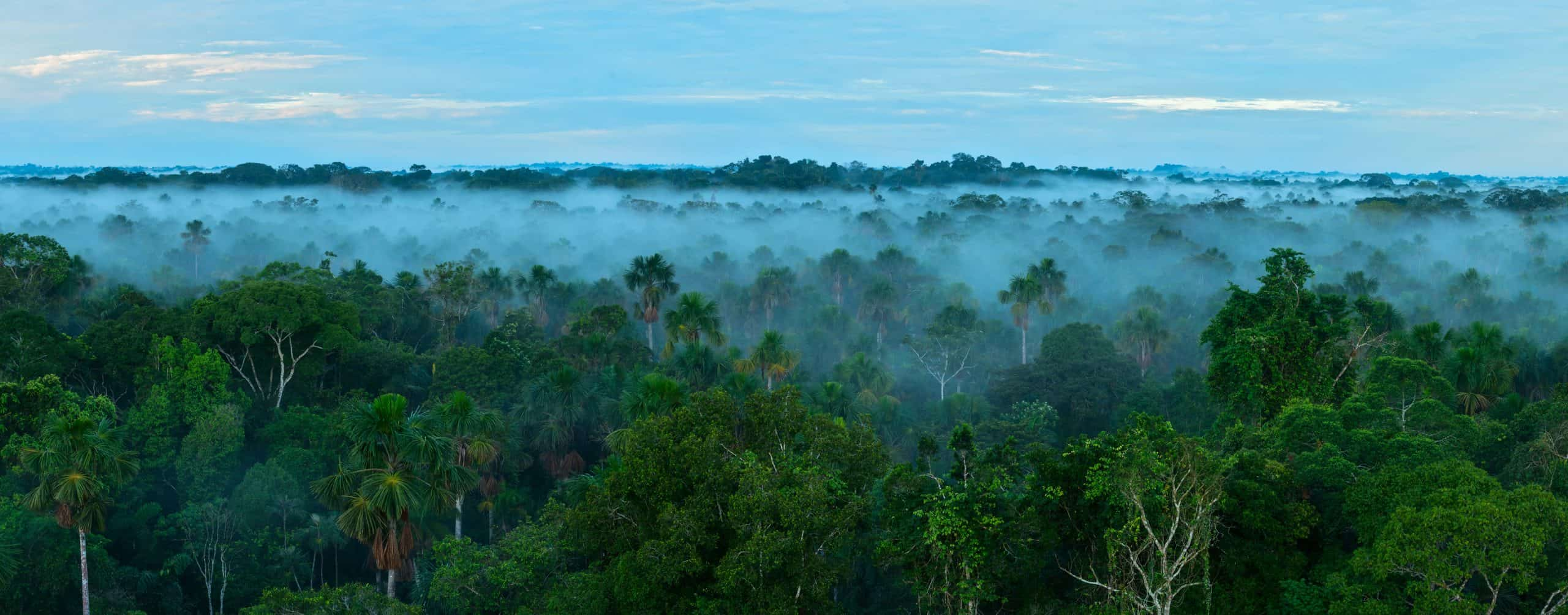
Okala’s goal is to create sustainable frameworks for the global economy to invest in restoring the environment. Its main focus is Central Africa, and in 2020 it started a pilot site in Gabon covering 270,000 hectares of rainforest.
To attract investment, Okala needed to monitor environmental change systematically across the whole site. It combined eDNA with other high-integrity monitoring methods, including camera traps and bioacoustics, to build a robust picture of biodiversity across the landscape.
The challenge
Monitoring biodiversity change across 270,000 hectares of Central African rainforest needed a method that was scalable, quick and practical in one of the world’s most challenging environments. Because of the size of the area, ease of deployment was critical.
Traditional ecological monitoring could not scale far enough to build the high-integrity data that Okala needed to attract global investment in nature restoration.
Our role
NatureMetrics provided eDNA analysis alongside Okala’s wider monitoring toolkit of camera traps and bioacoustics. Water sampling was designed to be easy to deploy at scale across the Gabon pilot site.
From just 40 water samples, eDNA detected more mammals than the camera traps deployed in the same landscape. It also provided data on over 1,300 vertebrate and invertebrate species, including some that no other method had detected. This shows how eDNA complements, and significantly extends, technologies such as camera traps.
The findings
eDNA detected 60% more mammal species than traditional methods. These included flying squirrels, which, according to Dr Whytock, are virtually impossible to detect with conventional methods in Central Africa.
In total, more than 1,300 species were detected during the project. These included 11 IUCN Red Listed species, such as forest elephants and giant pangolins, and 25 species potentially new to science.
Hear the full story from Dr Robin Whytock, CEO of Okala in our recent webinar - Watch Webinar now.
The impact
eDNA gave Okala traceable, verifiable and trustworthy biodiversity data, and investors responded well to it. This gave investors the confidence to support natural capital valuation, and Okala will use the data to unlock green investment in the project.
By showing that eDNA can deliver rigorous, scalable biodiversity data, Okala has set out a compelling model for mobilising global finance behind large-scale tropical forest restoration.
More client stories
Learn how NatureMetrics’ data and insight empowered businesses
with the clarity they needed to make lasting change


Wildfarmed
126% increase in pollinator activity: How Wildfarmed proved regenerative farming works
Read more →

AtkinsRéalis Mongolia
How AtkinsRéalis used eDNA to enhance biodiversity assessment for irrigation investment in Mongolia
Read more →Ready to build a nature strategy on evidence you can defend?
Tell us where you are and what your board, auditors or investors are asking for. We will map the fastest route to decision-grade answers.